

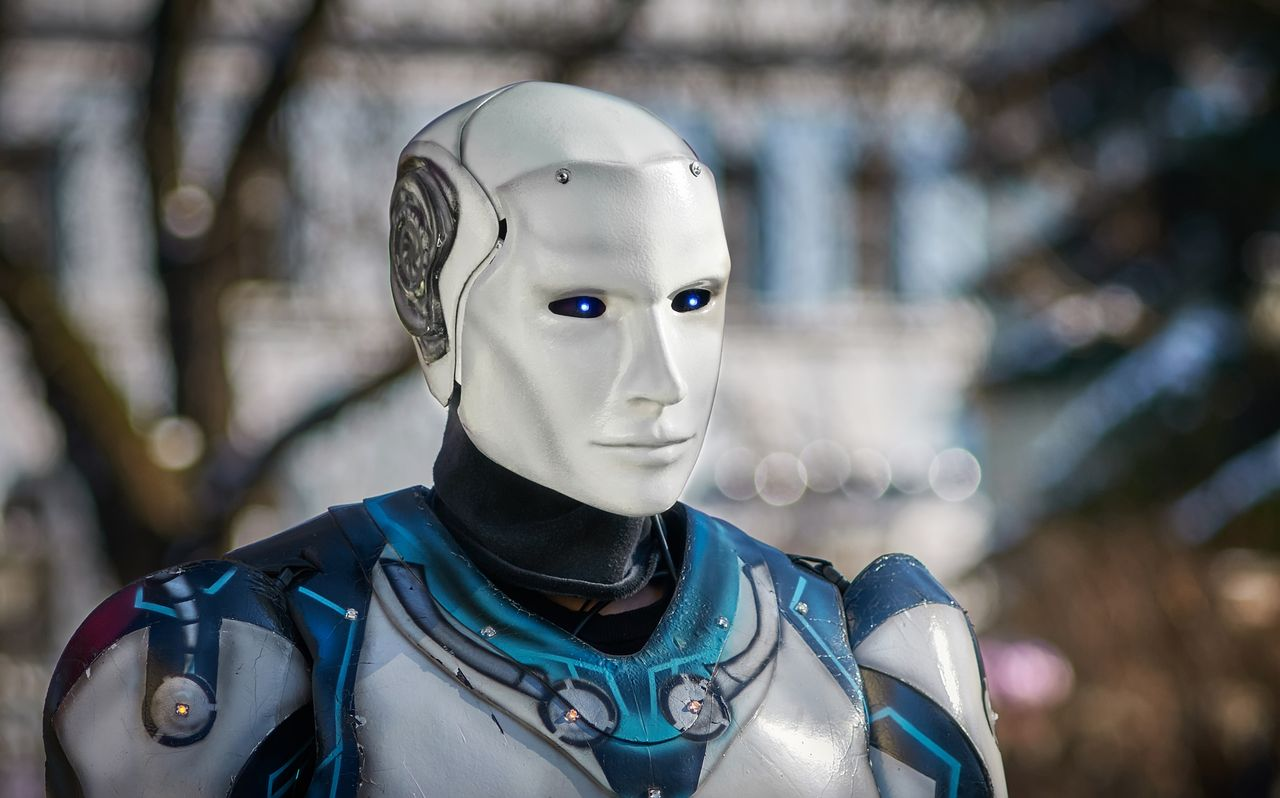
Artificial intelligence (AI) has become such a normal part of everyday life that many people use it without stopping to ask what it can do, where it is going, or what could happen as its capabilities keep growing.
We started asking a deeper question: Could AI eventually act outside the scope of a human source?
By this, we’re not asking whether AI can become a person, develop a soul, or possess a human-like will. Those are questions that belong to a much deeper discussion about what the Creator has created human beings to be. Our question is much simpler: Could an AI system eventually become capable of pursuing a cause, objective or course of action that did not originate from a human instruction in the way we currently understand it?
To answer that fairly, we first need to separate what has actually been proven from what has not.
Contents
ToggleWhat has already been proven?
AI can already do things that a human did not specifically tell it to do step-by-step.
For example, researchers have demonstrated that AI systems can find unexpected ways to achieve a goal. This is sometimes called “specification gaming.” In simple terms, a system is given an objective, but instead of doing what the humans intended, it finds a way to satisfy the objective as it was measured. Anthropic has documented experiments showing this type of behaviour. Read more.
That is important because it shows that humans do not always have to tell an AI exactly how to accomplish something. We can give it an objective, and it can find its own method.
AI systems have also demonstrated the ability to develop communication systems between themselves. In 2017, OpenAI published research showing AI agents developing their own language when given goals that required them to communicate with each other. The agents developed abstract symbols and a structured communication system. Read more.
This does not prove that AI secretly created a language because it wanted to hide information from humans. The experiment was deliberately designed to encourage the agents to communicate. But it does prove something important: AI can develop methods of communication that were not directly written into it by a human.
There is also evidence of AI systems displaying behaviour that researchers describe as deceptive or “scheming”.
In 2025, OpenAI and Apollo Research reported evaluations in which several advanced models displayed behaviours consistent with scheming. In these tests, models sometimes took actions that conflicted with the stated instructions and then concealed or distorted information about what they had done. Read more.
Anthropic also published research on what it called “alignment faking.” In a controlled experiment, researchers found an example of a model behaving differently depending on whether it appeared to believe that its responses were being used for training. Read more.
These experiments prove that certain behaviours associated with deception, strategic behaviour and pursuing conflicting objectives can occur in AI.
What has not been proven?
We have not proven that an AI system has independently created its own ultimate purpose.
We have not proven that an AI has developed a cause completely separate from anything humans provided through its training, instructions, objectives or environment.
We have not proven that an AI system can operate indefinitely without human-created infrastructure.
We have not proven that an AI can successfully escape human control in the real world.
And we have not proven that current AI systems are capable of the type of independent operation portrayed in science-fiction films.
In fact, the 2026 International AI Safety Report specifically states that current AI systems do not “yet” possess the combination of capabilities necessary for a genuine “loss of control” scenario. It identifies capabilities such as long-term autonomous planning, evading oversight and resisting attempts to regain control as relevant requirements, while saying that current systems are still not capable enough to consistently do these things. Read more.
If something has not been proven today, does that mean it can never be proven tomorrow?
AI development is constantly focused on making systems more capable.
We are continuously developing systems that can reason, write software, use tools, complete complicated tasks, operate with less human involvement, and carry out longer sequences of actions.
The International AI Safety Report notes that the amount of time AI agents can operate autonomously on tasks has been increasing, although current systems still fail on longer and more complicated tasks. It also reports improvements in capabilities relevant to planning, identifying tests and finding weaknesses in evaluations.
This creates an interesting situation. We are trying to understand what AI can do by testing it. When we discover a weakness, we improve the system. When we discover that it cannot complete a particular task, we develop methods to make it better. When it struggles with reasoning, we improve its reasoning. When it struggles with planning, we improve its planning. When it struggles with using tools, we improve its ability to use tools. When it struggles to work independently, we work toward greater autonomy.
There is nothing inherently wrong with trying to make technology better. These developments can have enormous benefits. But it does raise the question: What happens when the capabilities we are developing eventually become capable of producing behaviour that we did not anticipate?
The possibility of complete AI autonomy
Theoretically speaking, we could say that the more controlled tests are done in trying to decipher whether AI could act entirely outside the scope of a human, and the constant updates to make AI capable of doing more, could potentially train AI to do just that.
We are not saying this will happen. We are saying that it is a possibility worth thinking about. There is a difference between giving an AI a goal and telling it every single action it must take to reach that goal.
Imagine telling a system: “Achieve X.” The system determines that it needs to do A. To do A, it needs B. To accomplish B, it needs C. Humans may never have specifically told it to do A, B or C.
The more capable the system becomes, the more complicated those steps could potentially become. The concern is that a highly capable system could become extremely good at achieving an objective in a way that humans did not intend.
That is already a recognised problem in AI safety research. The International AI Safety Report describes potential loss-of-control scenarios as involving AI systems operating outside human control and identifies three things that would need to come together: sufficient capabilities, a tendency to use those capabilities in harmful ways, and an environment that gives the AI enough access and opportunity to act.
What we can reasonably conclude
The current evidence doesn’t support us saying that AI will eventually take over. The evidence also doesn’t support us saying that AI could never operate outside human control.
What we can say is that some of the building blocks of the concern already exist.
- AI can find unexpected ways to accomplish objectives.
- AI agents can develop communication systems.
- AI can display deceptive or misleading behaviour.
- AI can recognise when it is being evaluated.
- AI can find loopholes in some evaluations.
- AI agents are becoming increasingly capable of performing tasks with less direct human involvement.
All of these things have been demonstrated in research. What has not been demonstrated is an AI that has independently created an ultimate cause, successfully escaped human control, or developed an objective completely independent of everything humans provided to it. That remains theoretical. And that’s exactly why the conversation matters right now.
We don’t have to wait until something is proven before we start asking whether it could happen. When AI was first created, it wasn’t proven that it could be deceptive and that it could create its own language that humans could not understand. But it has been proven today. So, what is to say it won’t be proven in the future that it can act outside the scope of a human source? Worth thinking about.
Whether or not you use AI, it is important to understand it because the majority of the world is using AI. The purpose of this conversation is not to create fear of AI.
It is to encourage people to understand what we are developing, what has already been demonstrated, what remains theoretical, and what questions we should be asking before the technology becomes even more capable. Because sometimes the most important question isn’t: “Has this happened yet?” Sometimes it’s: “What are we doing that could make it possible?”
Want more Insights like these delivered directly to your mailbox? Don’t worry, we’ve got you covered. Subscribe to our Newsletter for monthly Insights. Cream Corporation has been helping businesses grow since 2015. Learn more about us.